

 By
By Learning guitar doesn’t have to start with complicated fingerings or endless scales. Some of the most recognizable songs ever written use only two chords. That means you can start making real music in minutes while training your rhythm, coordination, and ear. Playing these songs isn’t just an exercise; it’s a way to build confidence and enjoy the process of learning guitar.
Why Start With Two-Chord Songs?
As a beginner, one of the biggest challenges is combining chord changes with consistent strumming. Two-chord songs let you focus on timing without worrying about complex progressions. With fewer shapes to learn, your attention shifts to the real heart of music: rhythm. This also builds the foundation for more advanced playing, since almost every style of guitar depends on strong timing.
Practicing these songs is also rewarding. You quickly recognize the melodies, which motivates you to keep going. They also work as great warm-ups for more advanced players who want to polish rhythm or experiment with new strumming patterns.
20 Songs You Can Play With Two Chords
Here’s a curated list of classic and modern songs that rely on only two chords. Each of them has its own groove, mood, and purpose, making them perfect for practice and fun.
1. Horse with No Name – America
One of the most famous beginner-friendly tracks. The song alternates between E minor and D6/9, creating a hypnotic desert-like sound. It’s slow, forgiving, and great for practicing even strums.
2. Paperback Writer – The Beatles
This upbeat Beatles hit revolves around G7 and C. Its driving rhythm gives you a chance to focus on strong downstrokes. Perfect for players who want to practice keeping energy high through repetition.
3. Jambalaya – Hank Williams
A country standard that sticks to C and G. Its simple swing rhythm trains your sense of groove and works well with a shuffle strum.
4. Feelin’ Alright – Traffic / Joe Cocker
Based on C7 and F7, this soulful track has been covered countless times. Playing it teaches you how to keep a funky, syncopated rhythm going.
5. Achy Breaky Heart – Billy Ray Cyrus
This 90s hit uses A and E. It’s energetic and fun to sing along with, making it ideal for practicing fast chord changes while keeping a steady beat.
6. He’s Got the Whole World in His Hands – Traditional
One of the easiest songs to learn, usually played with G and D. Because it’s slow and repetitive, it’s perfect for children or absolute beginners.
7. Heroin – The Velvet Underground
Alternates between D and G. Its droning quality makes it an interesting choice for practicing endurance, as the song often stretches out for long sections.
8. Tulsa Time – Don Williams / Eric Clapton
Built on G and D, this song offers a steady country groove. It’s a great introduction to country strumming styles.
9. Eleanor Rigby (verses) – The Beatles
Though often remembered for its orchestral arrangement, the verses can be played with Em and C. It’s moody and haunting, showing how powerful two chords can sound.
10. The Tide Is High – Blondie
This reggae-influenced track moves between D and A. Practicing it helps you experiment with offbeat strums typical of reggae and ska.
11. Molly Malone – Irish Traditional
A folk ballad typically played with C and G. Its gentle waltz feel helps beginners explore 3/4 time rather than the usual 4/4 rhythm.
12. Everyday People – Sly & The Family Stone
This funk anthem works with G and C. Its laid-back groove is perfect for practicing clean, consistent strumming without overplaying.
13. Fire on the Mountain – Grateful Dead
Played with G and C, this jam-band classic teaches you how to lock into a steady groove while letting the melody flow naturally.
14. Something in the Way – Nirvana
Alternates between D minor and F. Its dark, slow atmosphere gives you room to practice sustained strums and dynamic control.
15. Janie’s Got a Gun (verse) – Aerosmith
The verses center around A and G. Its slow tempo helps you refine chord changes while keeping a steady beat.
16. Working Class Hero – John Lennon
Built on Am and G, this raw acoustic track focuses heavily on lyrics. Playing it trains you to maintain rhythm while singing.
17. Dance the Night Away – The Mavericks
This fun, upbeat tune uses A and E. The rhythm has a Latin feel, offering a chance to experiment with faster strumming.
18. Stop Whispering – Radiohead
An early Radiohead track alternating between D and E. Its dreamy, repetitive sound works well for building stamina and learning to play softly yet steadily.
How to Practice These Songs
Start slow. Play the chords cleanly before worrying about strumming. Once transitions feel smooth, introduce simple downstrokes in time. From there, experiment with accents, muted strums, or fingerpicking. Singing along adds another layer of coordination.
Try recording yourself. Listening back shows whether your rhythm drifts or if your chord changes are late. Another trick is to loop small sections instead of forcing yourself through the entire song at once.
Train Rhythm With a Metronome
Good rhythm separates a confident guitarist from a hesitant one. Even with only two chords, sloppy timing makes the song fall apart. Practicing with a metronome guarantees steady progress. Improve your timing with Camtronome.
The easiest way is to use your phone. Apps like Camtronome provide precise timing and flexibility without requiring extra gear. You can set tempo, accents, and subdivisions that fit each song. Practicing Horse with No Name at 70 bpm or Achy Breaky Heart at 110 bpm becomes simple when you have a tool guiding your beat.
Download Camtronome today and make it part of your daily practice. Consistency with rhythm will make every two-chord song sound tighter and prepare you for more complex music.
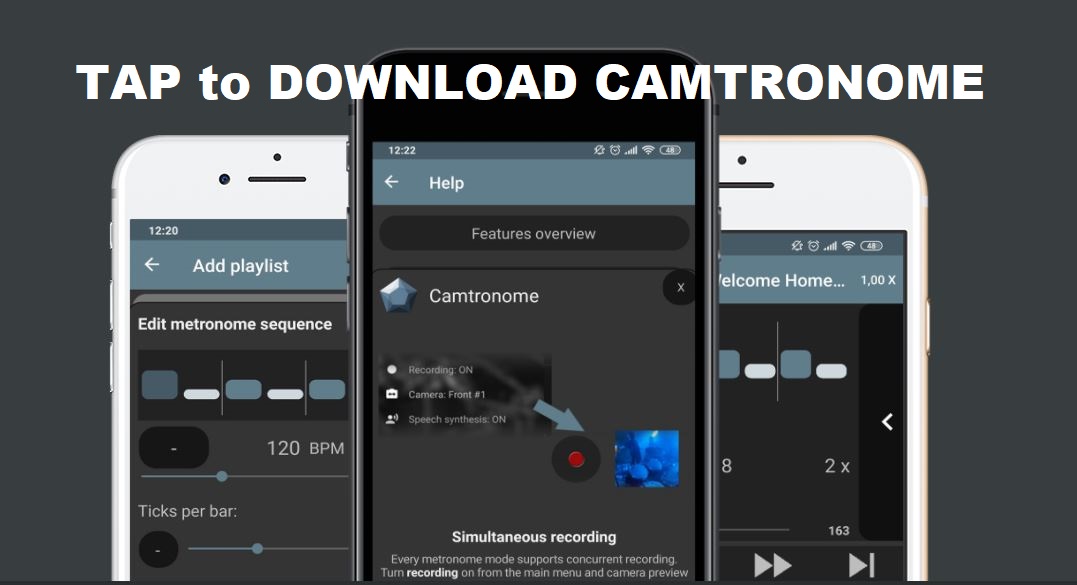
download camtronome banner
Moving Beyond Two Chords
Once you’re comfortable, expand to three-chord classics like Knockin’ on Heaven’s Door or Sweet Home Alabama. The skills you’ve built with timing, clean strumming, and confidence transfer directly to harder songs. Eventually, you’ll be able to combine rhythm with riffs, solos, and creative songwriting.
Playing with two chords isn’t a shortcut—it’s a proven path to building a strong foundation. These songs prove that great music doesn’t need to be complex. With steady practice, you’ll discover that simplicity often unlocks the best learning experience. Do you want to discover more easy guitar songs? Then check our list of campfire classics.